Choosing Rubber Thickness vs Hardness
Classic provincial Hurricane setup question: you’re on 39° / 2.1 mm and want more power—do you go 40° / 2.1 mm or 39° / 2.15 mm?
In the same model, raising hardness or thickness both add support to some degree, but the feel is not the same.
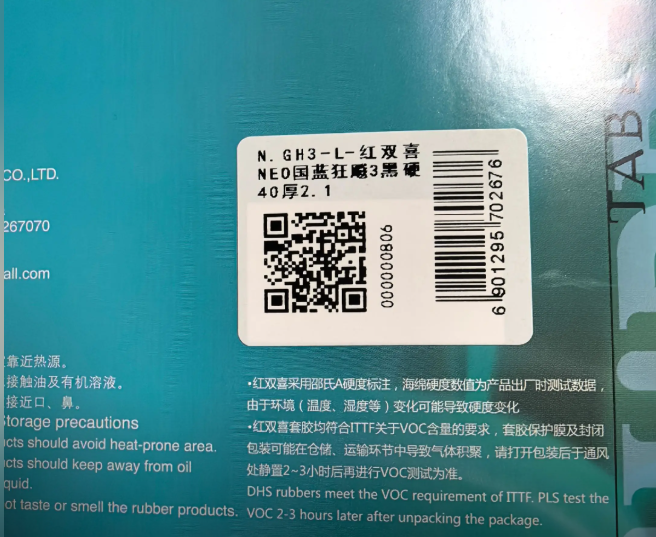
Option A — Raise hardness (40° / 2.1 mm)
Same thickness, harder sponge.
| Feel | Clearly stiffer. At low impact it’s harder to penetrate; feedback is direct and rigid. |
| Performance | Stronger support and a higher power ceiling—if you can fully compress the sponge. |
| Best for | Players chasing max explosion and a strong offensive game. |
Option B — Raise thickness (39° / 2.15 mm)
Same hardness, thicker sponge.
| Feel | Rated hardness stays; at mid/low force the change is subtle. Better dwell / “ball-eating” than the hard step-up. |
| Performance | Slightly more cushion/support than 2.1 mm, but easier to feel “not transparent”—harder to bottom out. |
| Best for | Keeping the original feel while needing a bit more cushion on heavy loops. |
Why pros often pick harder, not thicker
!!! note "The 4.0 mm rule" ITTF: topsheet + sponge + glue + booster must stay ≤ 4.0 mm. A 2.15 mm sponge plus thick glue and multi-boost can fail a thickness check. Pros often stay at 2.1 mm and climb hardness (41° / 42°) for more power with less rule risk.
Recommendation
- Want more power / stronger support, and you trust your stroke force → 40° / 2.1 mm
- Want to keep dwell and feel, but 2.1 mm bottoms out too soon → 39° / 2.15 mm
Related: Hurricane Blue vs Orange Sponge · Boosting Truth · Hurricane 3 Multi-Stage Boosting
Note
Translated from Chinese—please suggest fixes if wording looks off.